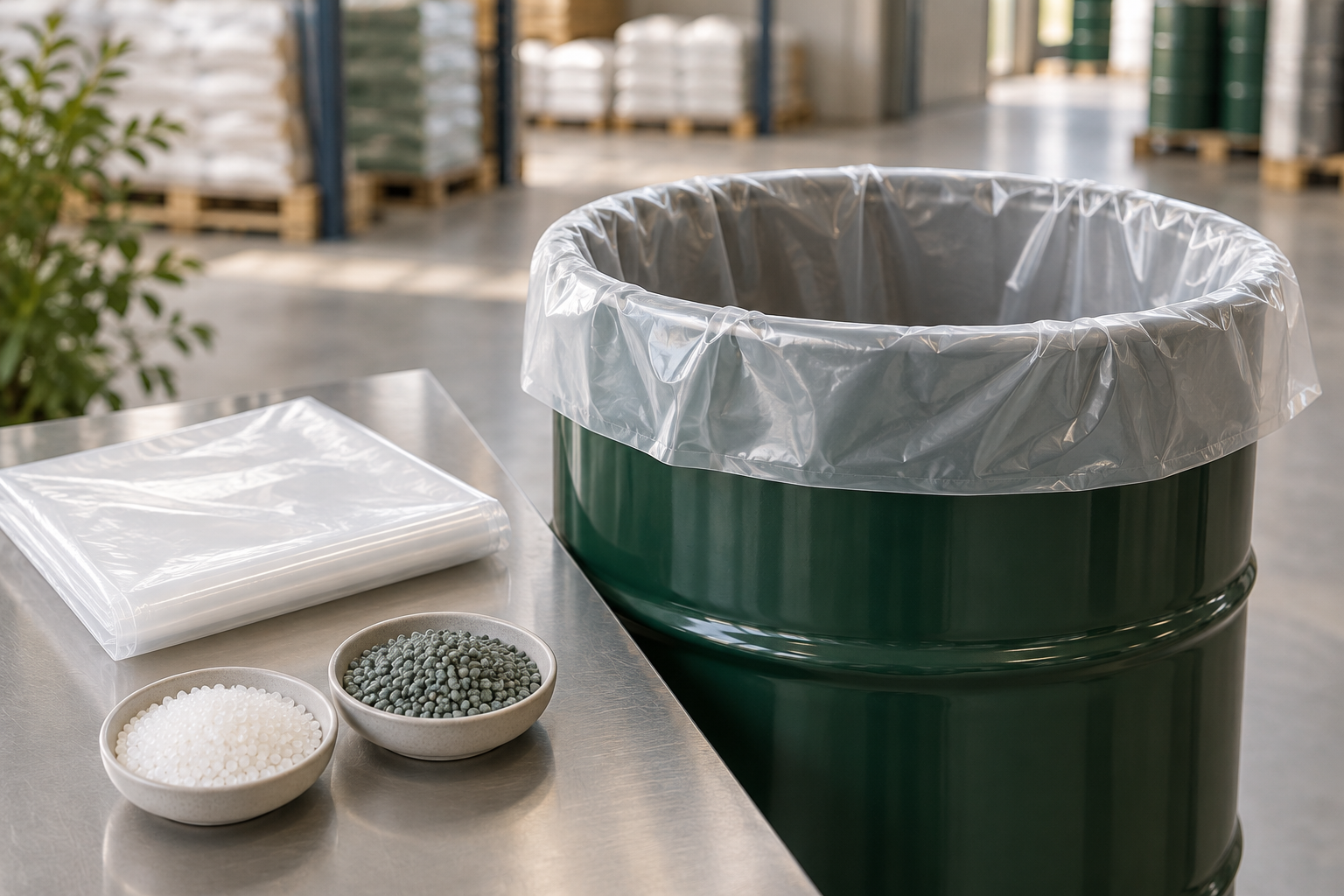
A liner ordered today may arrive under a different tax rule next year. For UK buyers planning industrial packaging purchases, the origin of recycled plastic now deserves a place beside dimensions, thickness and price.
HMRC updated its Plastic Packaging Tax guidance on 28 August 2026. It states that reprocessed pre-consumer plastic waste can qualify as recycled plastic for this tax only before 1 April 2027. For orders crossing that date, a specification that simply says “recycled material” may leave a commercially important question unanswered. Read HMRC’s guidance.
Pre-consumer and post-consumer describe different material sources. HMRC’s definition of post-consumer waste includes material generated by household, commercial, industrial and institutional end users. It does not mean household collection alone.
A useful supplier conversation therefore goes beyond asking for a recycled percentage. Ask which source supports that percentage, how it is documented and whether the proposed formulation will remain available for repeat orders. Link the answer to the specific liner being purchased.
Under the current guidance, packaging components containing at least 30% qualifying recycled plastic are not chargeable, although recordkeeping and registration considerations remain. This is a tax threshold, not a universal requirement to manufacture every liner with 30% recycled content.
For a drum liner, carton liner or other industrial bag, material selection must also reflect what goes inside it. A formulation proposed for one non-contact application should not automatically be transferred to an application with different contamination, compatibility or contact requirements.
When comparing an existing liner with a proposed alternative, keep the actual container and filling process constant. Assess insertion, closure, handling and any application-specific requirements before approving the change. A lower quoted material cost has limited value if the new bag creates interruptions on the packing line.
For a repeat programme, identify which orders may cross the April 2027 boundary and ask the responsible UK business to confirm the relevant tax treatment. Give each approved formulation a clear version so that a reorder does not silently revert to an earlier blend.
It is also useful to agree what happens if the specified feedstock becomes unavailable. Require discussion before a material substitution, and assess the commercial and performance implications together.
Planning industrial liner orders for 2027? Send INTERPAC your liner application, destination market, dimensions and material requirements to discuss the next specification.