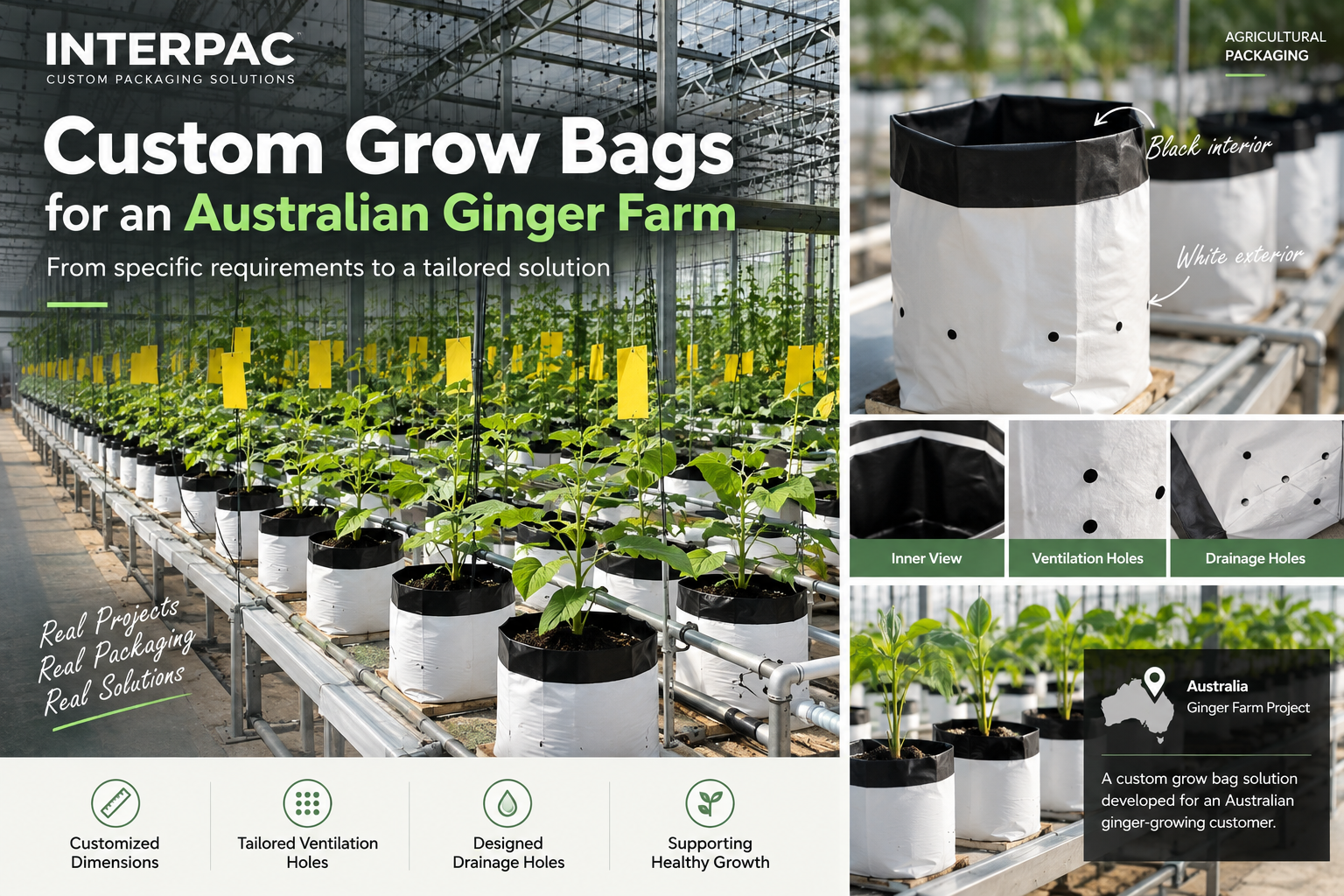
An Australian ginger-growing customer approached INTERPAC for a plastic alternative to the nonwoven grow bags they had been using. Their request went beyond a change in bag type: it included custom dimensions, a white exterior, a black interior, and openings intended for ventilation and drainage.
We manufactured the bags to that brief. The project offers a practical lesson for agricultural buyers: a proposed change becomes a workable manufacturing brief when the details are clearly defined.
The customer specified four features for the new bag:
Together, these requirements defined the product we were asked to make. The outcome documented here is the manufacture of the requested bags; field-performance improvements over the customer's previous bags have not been established.
A photograph can communicate the overall shape and colour arrangement. To reproduce a bag consistently, the manufacturer also needs clear dimensions and an agreed opening layout.
For dimensions, specify how each measurement is taken. Measurements on a flat bag and measurements on an opened bag describe different things. A reference sample or a drawing helps the buyer and manufacturer discuss the same product.
For openings, move beyond a general instruction such as “add drainage holes.” Agree on the hole diameter, number and position, with clear reference points on the drawing. Include the base as well as the sides, because a product photograph may not show every opening.
The dimensions and hole measurements for this customer's project are not published here. A new enquiry should be developed around the next grower's own requirements.
If you are considering a different grow bag, begin with what you use today. Explain which features you want to change and which you want to keep. Identify the requirements already decided and those that still need discussion or evaluation.
A sample or photograph can start that conversation. An agreed specification then gives the manufacturer a clear reference for production. Any proposed bag should be evaluated by the growing team in its intended setup before conclusions are drawn about crop performance.
This Australian project is a customer-specific manufacturing case. It does not establish that plastic grow bags are the best choice for every crop or farm. Its useful takeaway is the process: show the existing bag, explain the intended change, and define the details the next bag must meet.
For more guidance on preparing a specification, read our nursery bag guide to size, drainage and outdoor use.
INTERPAC works with businesses across foodservice, bakery, beverage, medical, agricultural, retail and industrial packaging.
For a grow bag enquiry, share your crop, current bag or reference image, proposed dimensions, colour arrangement, opening layout and expected order quantity. If some details are still undecided, we can discuss the manufacturing requirements with your team.
Contact INTERPAC about your grow bag project or email info@interpac.co. You can also explore our agricultural packaging range.