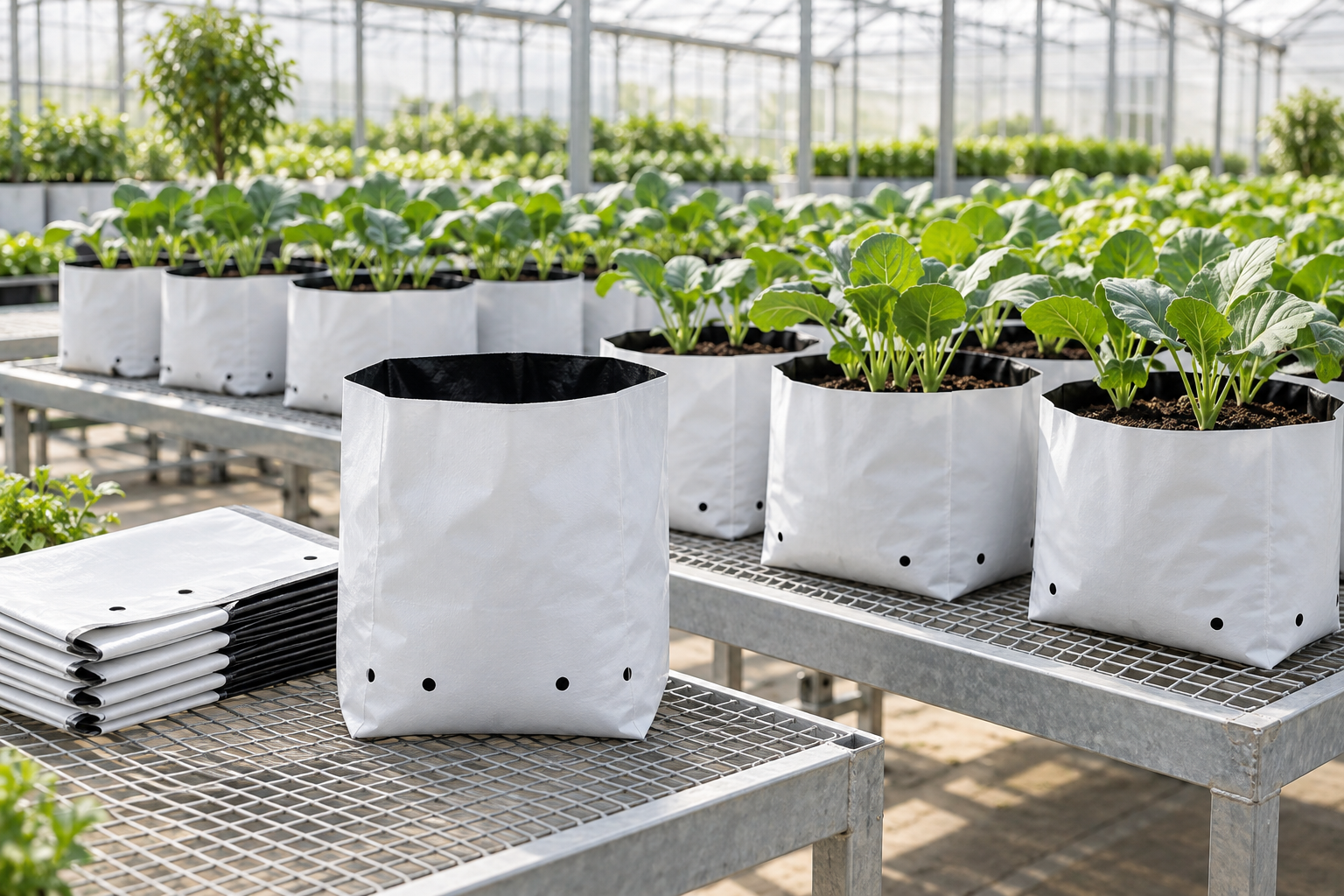
A grow bag has a job to do throughout the crop cycle. It also leaves the farm with a practical question after use: who will accept the material, and in what condition?
A September 2026 notice from Pennsylvania’s Department of Agriculture illustrates why that question matters. Its Agricultural Plastic Recycling Program seeks proposals to develop collection and recovery for used farm plastics, including planting containers and several types of agricultural film. The programme places emphasis on collection infrastructure, material quality and markets for recovered plastic. It is a regional development initiative, not evidence that every farm already has a recycling service. See the official programme notice.
For farms elsewhere, the useful lesson is to speak with the intended collector before selecting the next bag. Ask whether they accept used grow bags specifically. Acceptance of one agricultural film does not establish acceptance of every bag, colour or construction.
Give the collector a description of the proposed material and how it will be used. Request their preparation, separation and storage instructions, along with any minimum collection quantity. These answers can influence the practical value of a packaging choice long before the bags reach the farm.
The growing application still comes first. Required service life, bag dimensions, drainage layout and handling method should reflect the farm’s own production system. Reducing material without checking those conditions can create a product that is difficult to use or remove intact.
At the same time, ask the supplier to identify the bag’s construction clearly. Colour alone does not tell a collector what the material is. If the farm uses several bag types, retaining the specification for each can make later discussions more productive.
Consider a farm trial using two bag sizes. Alongside growing and handling observations, the farm could record the time needed to empty and separate the used bags, the space they occupy before collection and any rejected material. This is a proposed evaluation method, not a reported INTERPAC customer result.
Those observations help purchasing compare the full operating burden. Include bag cost, removal labour, temporary storage and collection or disposal charges. A claim that a material is technically recyclable does not establish that a local operator will collect it economically.
Preparing grow bags for your next crop? Share your crop, growing system, required service life and collector’s material requirements with INTERPAC. These details provide a stronger starting point for a custom bag discussion.